Guide to Buying Property in Vietnam: The 2026 Investor’s Handbook

The Vietnamese real estate landscape has entered a new era in 2026. Following the full implementation of the 2024 Land Law, the 2023 Housing Law, and the 2023 Law on Real Estate Business, the market has shifted toward high transparency and stricter developer accountability. For investors, the 2026 market is more regulated and digitalized, offering significantly better protection for those buying property in Vietnam than in previous years.
1. The Legal Framework: “Ownership” vs. “Land Use Rights”
In Vietnam, individuals do not own land; it is collectively owned by the people and managed by the State. As a foreigner, you acquire Land Use Rights (LUR).
The Pink Book (The Holy Grail)
The official title deed is the “Pink Book” (Certificate of Land Use Rights and Ownership of House). In 2026, the government has moved toward a unified digital land database. This means “Pink Books” are now issued with unique QR codes, allowing investors to verify the property’s history and legal status instantly via the provincial Department of Construction’s portal.
Foreign Ownership Quotas
- Condominiums: Foreigners can own up to 30% of the total units in a single apartment building.
- Landed Houses: Foreigners can own up to 250 houses within one administrative ward.
- Marry Local: If you are married to a Vietnamese citizen, you are entitled to Freehold (stable long-term) ownership, identical to a local.
The 30% cap applies building by building, so availability differs from one development to the next — worth checking project by project when you browse houses for sale in Vietnam.
2. 2026 Market Hotspots: Infrastructure & Growth
The completion of major “Mega-Projects” has redefined the most “investable” areas this year.
Ho Chi Minh City (HCMC): The High-Tech Financial Hub
- Thu Thiem (District 2): Now established as the new Central Business District.
- Metro Line 1: Now fully operational, the “Metro Effect” has caused a 15-20% surge in rental demand for projects within 500 meters of any station.
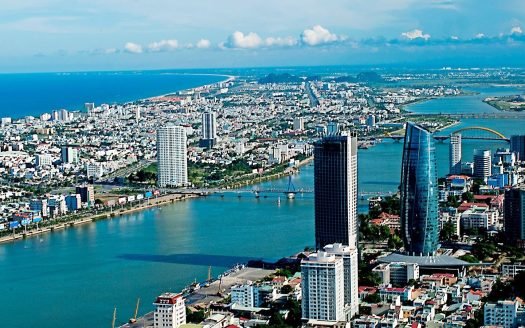
Da Nang: The Tourism & Tech Powerhouse
Da Nang has successfully transitioned into a primary hub for digital nomads and semiconductor firms.
- Beachfront Demand: High-end apartments near My Khe Beach remain the most searched assets. For a deeper look at why this area is leading the market, read why Da Nang is Vietnam’s most searched beach destination.
- Land Prices: With the 2026 “Market-Based Land Pricing” now in effect, land values are more transparent but higher. To understand this shift, see our analysis on why are land prices surging in Da Nang.
3. The 2026 Purchasing Process (Off-Plan Focus)
Buying “Off-Plan” (property under construction) is the most common entry point for foreigners. The 2026 regulations have added several safety layers:
- Deposit Limit (New for 2026): By law, developers can no longer collect more than 5% of the property value as a deposit before the project is legally eligible for sale.
- The Bank Guarantee: Every developer is now required to have a bank guarantee. If the developer fails to deliver the house on time, the bank is legally obligated to refund your money.
- Capital Mobilization: Developers can only collect up to 70% of the value before handover. The final 5% is strictly reserved until the “Pink Book” is in your hand.
4. Taxes and Fees (2026 Updated Rates)
Buying property in Vietnam involves specific one-time and recurring costs:
| Fee Type | Rate | Responsibility |
| VAT | 10% | Buyer |
| Registration Tax | 0.5% | Buyer (Paid at Pink Book stage) |
| Maintenance Fee | 2% | Buyer (One-time “Sinking Fund” for building repairs) |
| Personal Income Tax | 2% | Seller (On the total sale price) |
| Management Fee | $0.5 – $1.5 / sqm | Monthly cost for security, gym, and pool |
Official Resource: For a detailed look at tax compliance and how to repatriate your profits legally, consult the Vietnam General Department of Taxation.
5. Frequently Asked Questions (FAQ)
What is the term of ownership for foreigners?
Foreigners are granted a 50-year leasehold, which is clearly stated on the Pink Book. Under the 2023 Housing Law, you can apply for an extension of an additional 50 years. This extension is now administrative and does not require a new land-use fee, provided you remain in good legal standing.
Can I get a mortgage in Vietnam as a foreigner?
In 2026, it is still difficult to get a mortgage from local Vietnamese banks (like Vietcombank). However, international banks like HSBC or UOB (Singapore) offer financing to foreigners who have a local work permit (KITAS equivalent) and a stable income within Vietnam.
How do I take my money out of Vietnam after I sell?
To remit funds abroad, you must provide the bank with:
- The original Sales and Purchase Agreement (SPA).
- The tax completion certificate (proving you paid the 2% PIT).
- Evidence that the original investment funds were brought into Vietnam via a bank transfer (the “Capital Account”).
Can I buy a property from a Vietnamese local?
Only if that specific unit is already within the 30% foreign quota. Most “resale” units owned by locals cannot be transferred to foreigners; you must typically buy from the developer or another foreigner who already holds the foreign quota. For a full breakdown of the current growth areas, see our Da Nang real estate market outlook.
Final Investor Tip for 2026:
With the removal of the old “Land Price Frame,” the government now uses Market-Based Land Prices. This means the “official” price on your contract should always match the “actual” price paid. In 2026, the tax authorities use AI to flag undervalued contracts, which can lead to severe delays in receiving your Pink Book.